Here is what a secure floor looks like to a resident, from before they have access to after it ends, and what your security team sees. Phone pictures are shown on Android and iPhone, side by side.

The pictures use a penthouse floor (PH) and an up hall call (UP) on our test bench, for a made-up resident, Alex Martin. For everything secure doors and elevators can do, see Security.

Before access

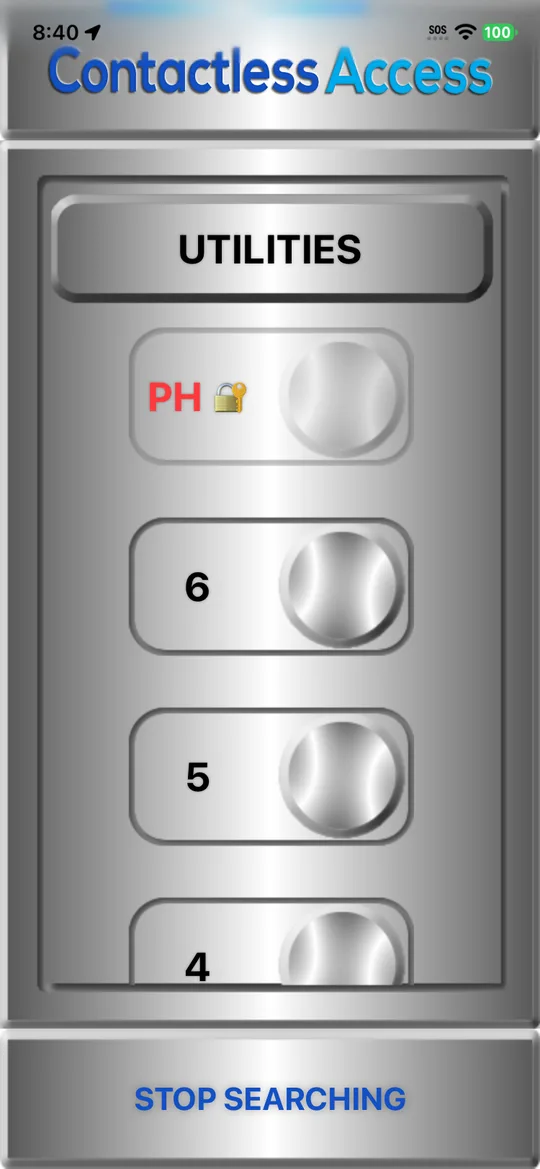
A secure floor shows 🔐 beside its name until this phone has access.
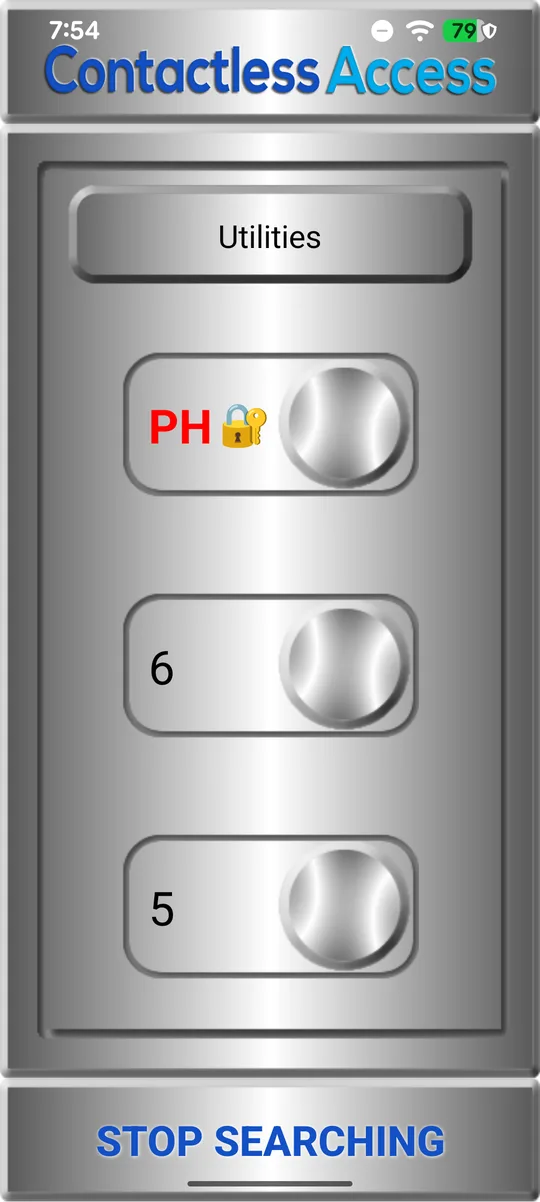
  • CA Secure on Android, inside the elevator: floor buttons PH, 6 and 5, with 🔐 beside PH.

    Android

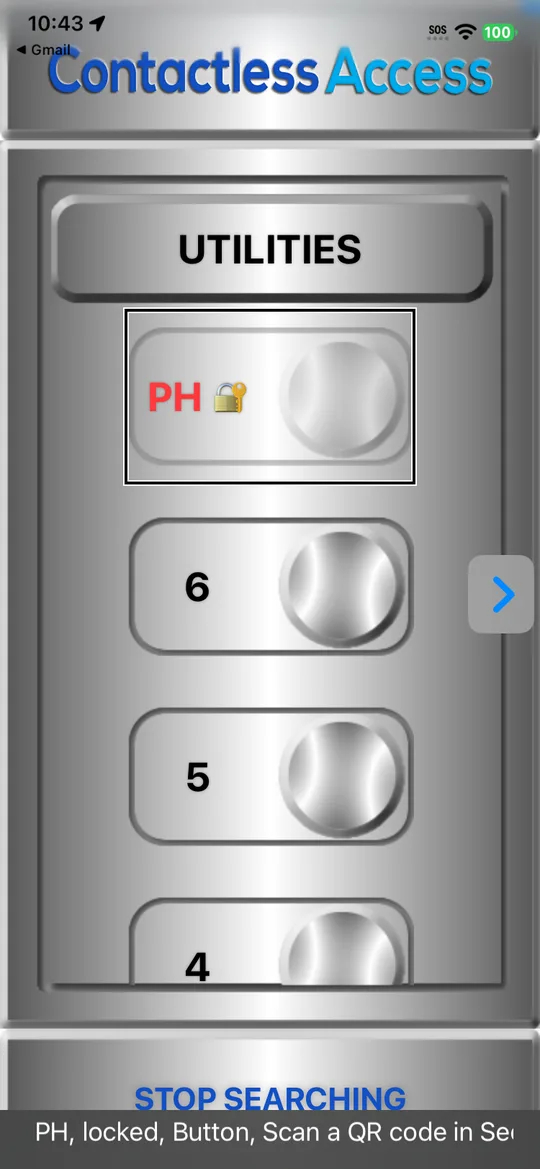
  • CA Secure on iPhone, inside the elevator: floor buttons PH, 6, 5 and 4, with 🔐 beside PH.

    iPhone

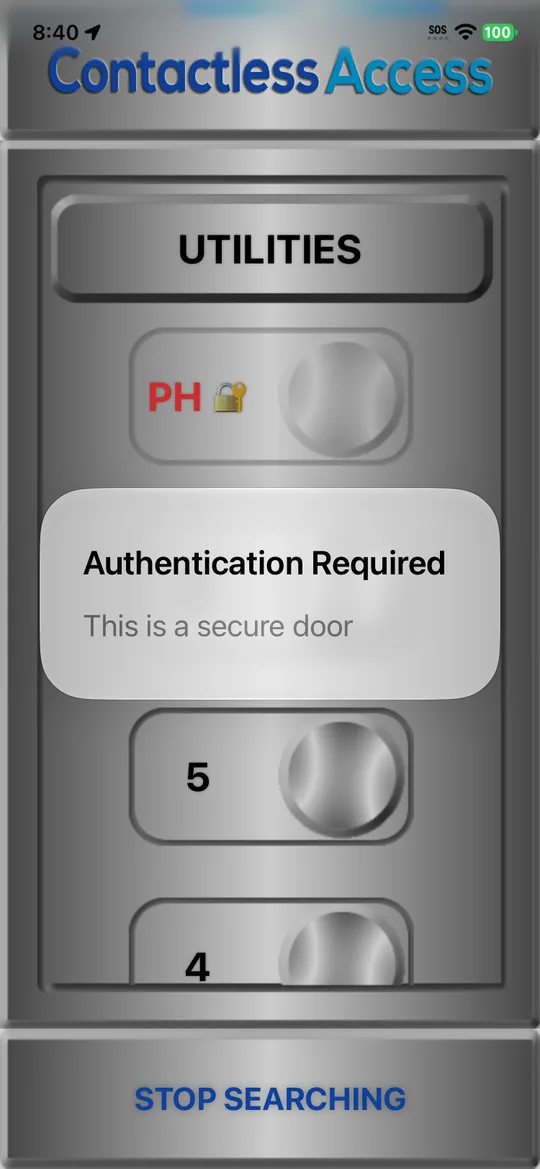
A tap on a locked floor or hall call doesn’t press it. The app says the button is secure.
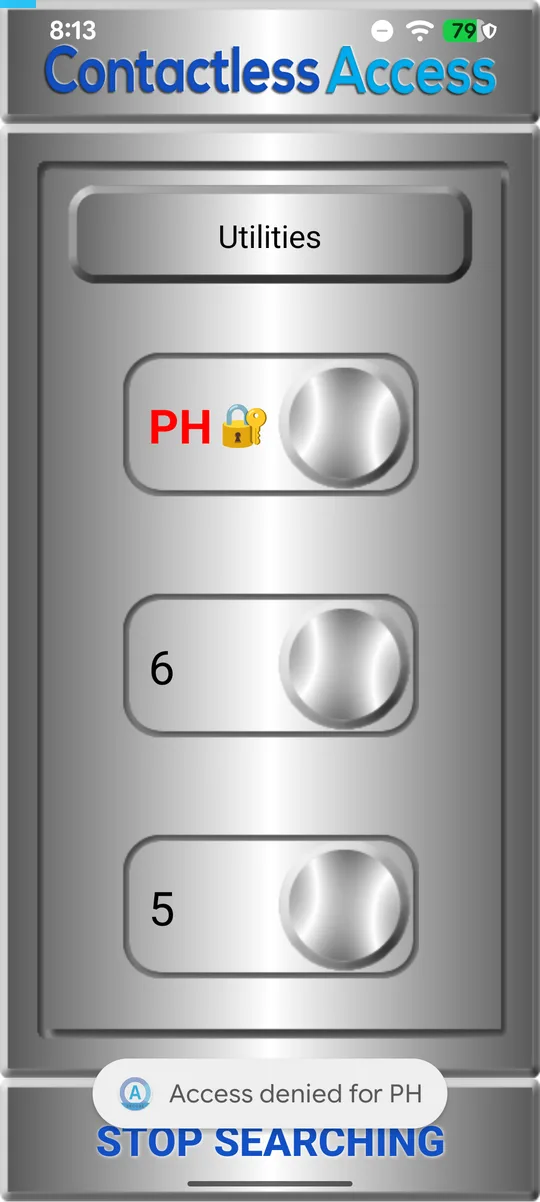
  • Android: after a tap on the locked PH button, the message Access denied for PH.

    Android

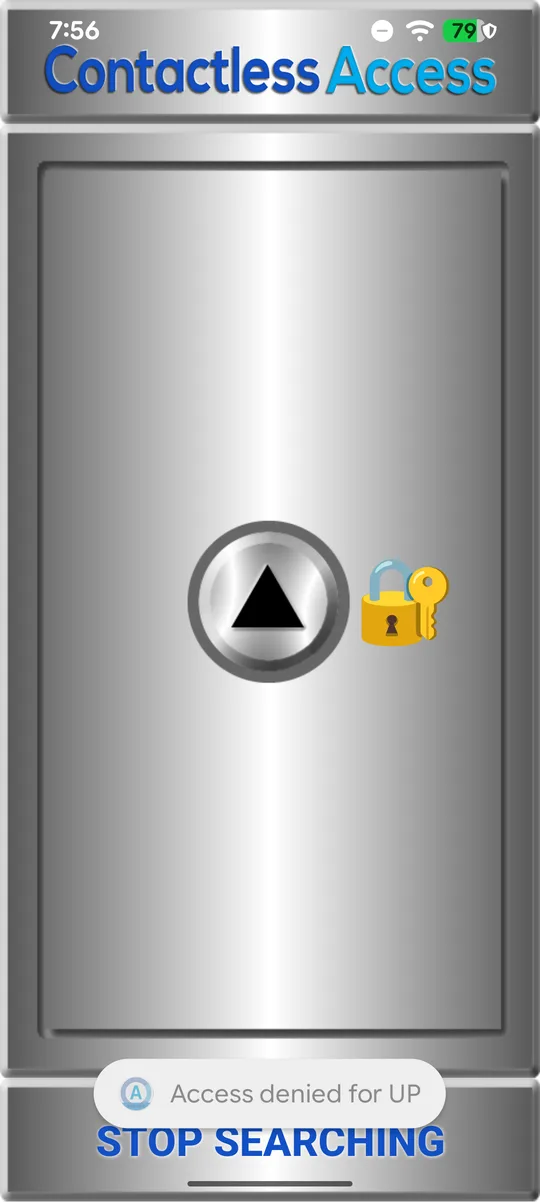
  • Android: after a tap on the locked UP hall call, the message Access denied for UP.

    Android

  • iPhone: after a tap on the locked PH button, a message saying the button is secure.

    iPhone

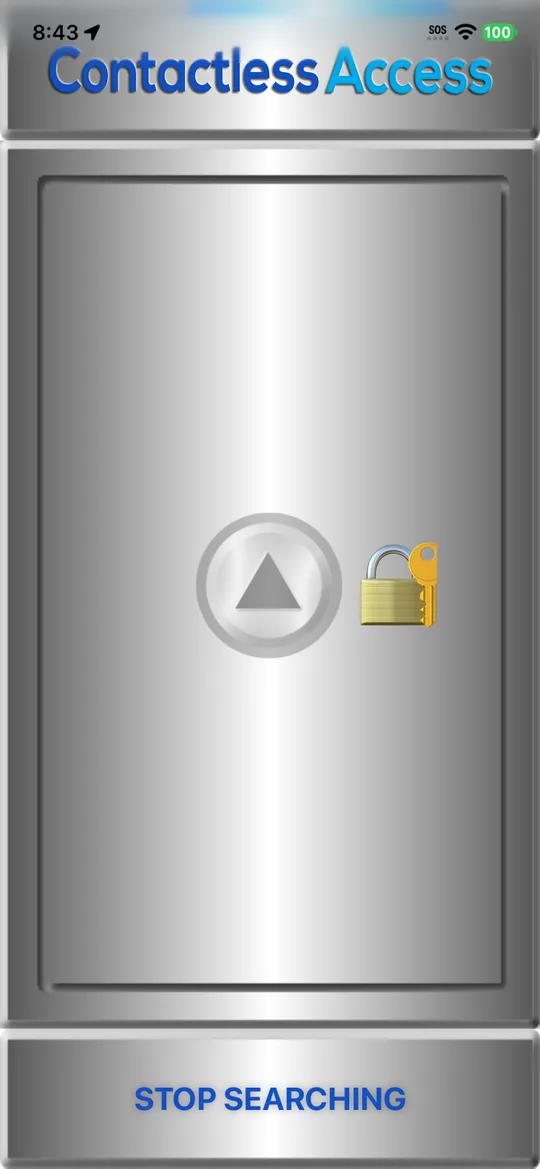
Hall calls can be secure too: here UP, so only approved people can call the elevator up from this floor.
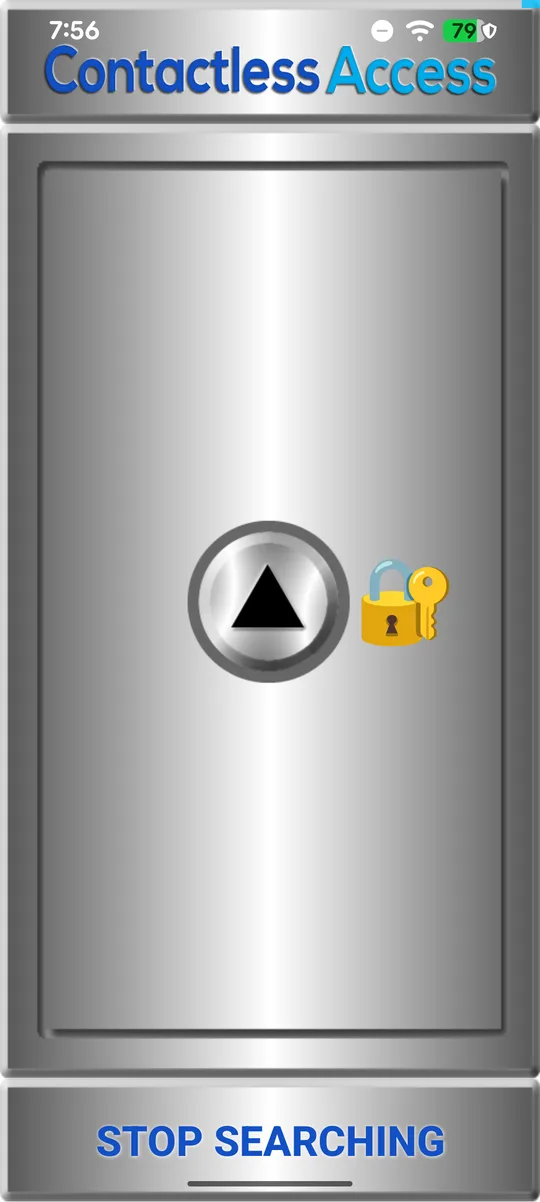
  • Android, at a floor: the up hall call button with 🔐 beside it.

    Android

  • iPhone, at a floor: the up hall call button with 🔐 beside it.

    iPhone

Access arrives

Security chooses the floors, the last day, the days and hours, and how secure each access is. High asks for an SMS code, and a fingerprint or Face ID before every press.
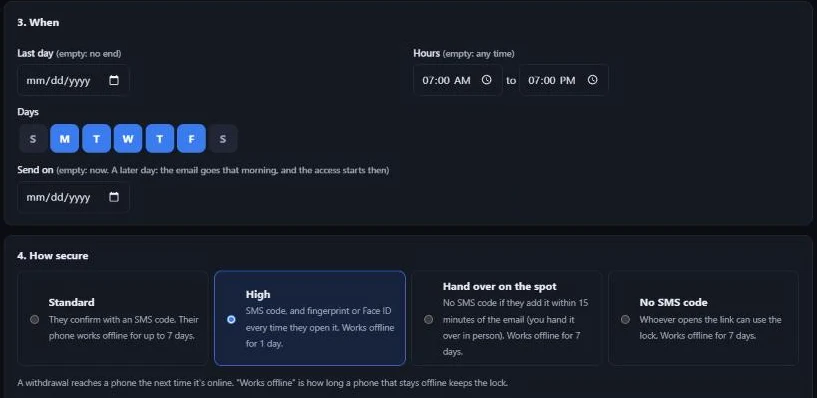
Give access in the security admin: hours 7 AM to 7 PM, Monday to Friday, and the four security choices Standard, High, Hand over on the spot and No SMS code, with High chosen.
Days, hours and the security level for each access.

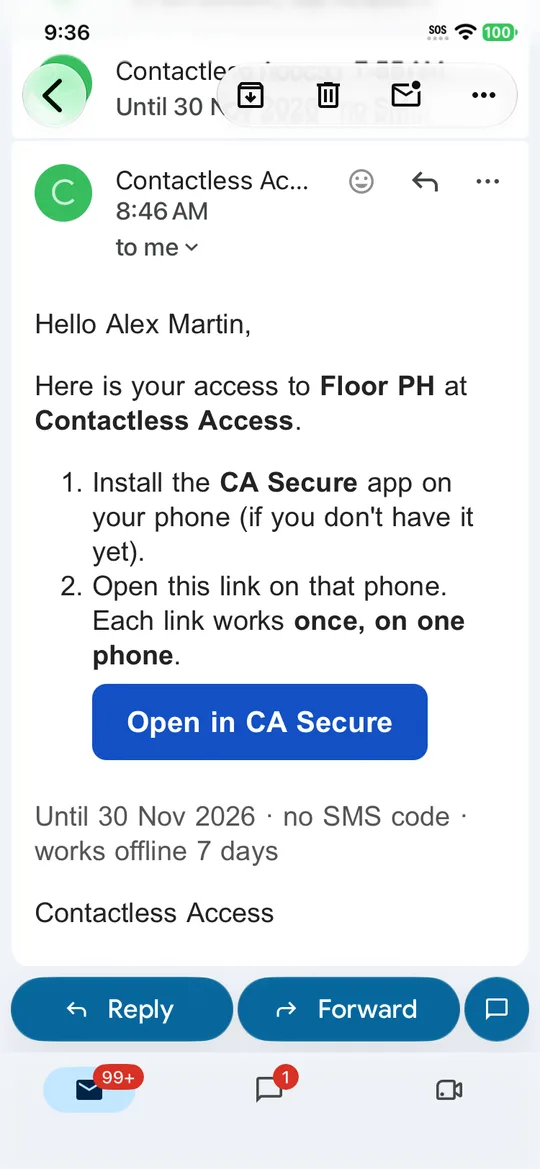
The resident gets an email with a link. Each link works once, on one phone.
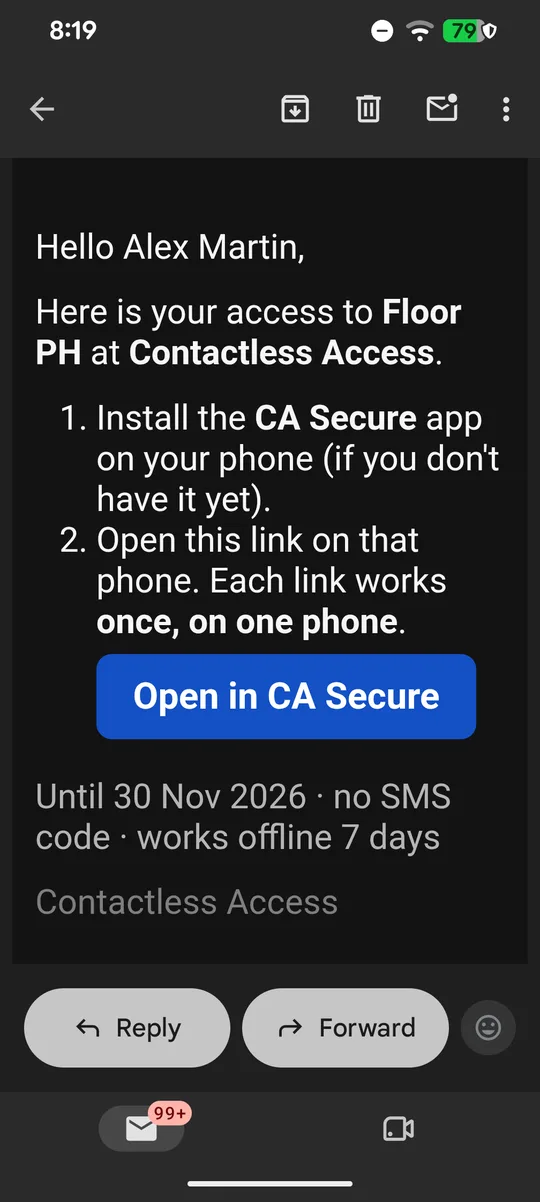
  • The access email on Android: Hello Alex Martin, here is your access to Floor PH, with the steps and an Open in CA Secure button.

    Android

  • The same access email on iPhone, with the Open in CA Secure button.

    iPhone

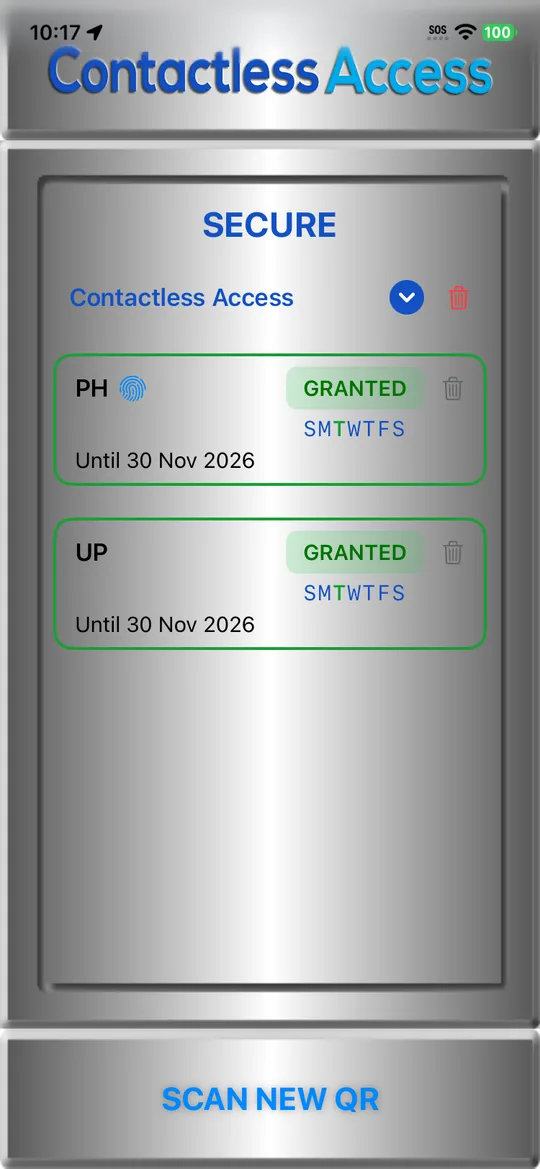
The access appears on the Secure tab with its last day and days of the week.
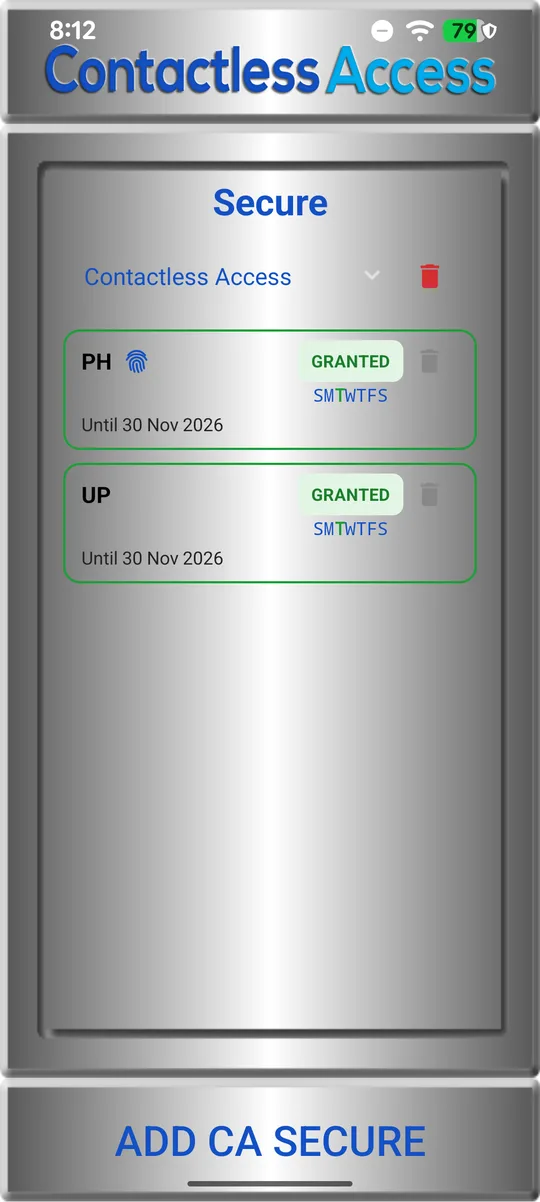
  • The Secure tab on Android: PH and UP both GRANTED until 30 Nov 2026, with the days of the week; PH shows a fingerprint mark.

    Android

  • The Secure tab on iPhone: PH and UP both GRANTED until 30 Nov 2026, with the days of the week; PH shows a fingerprint mark.

    iPhone

Using it

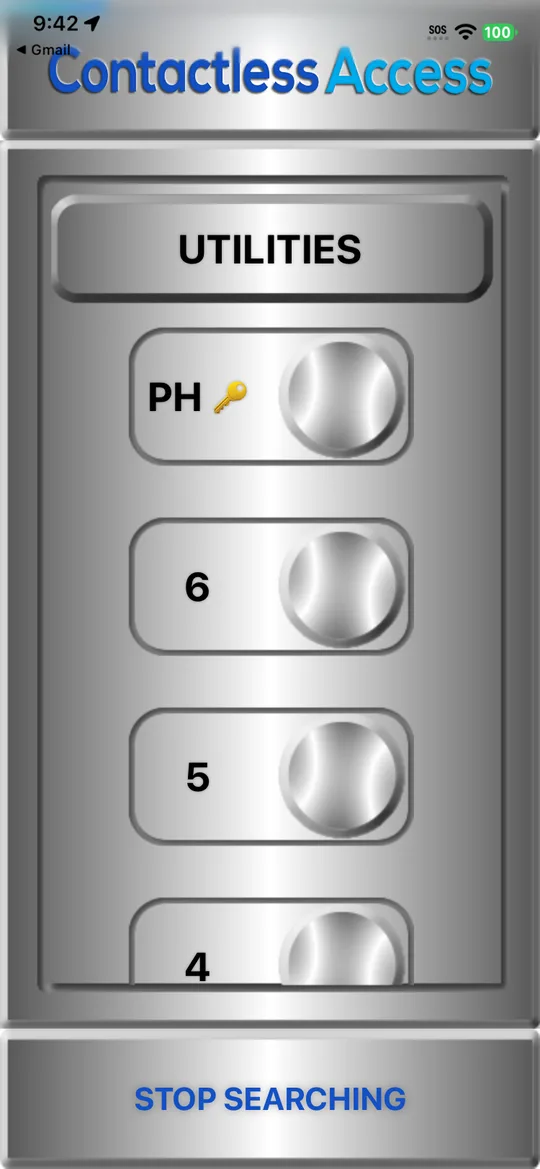
With access, 🔐 becomes 🔑 and the floor works like any other.
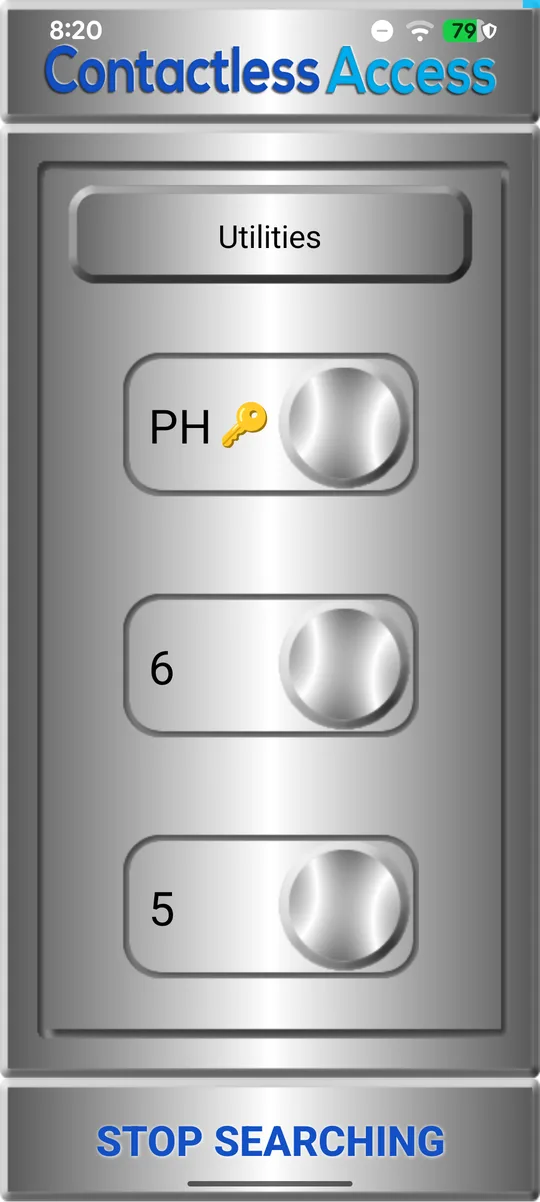
  • Android, inside the elevator: PH now has 🔑 beside it.

    Android

  • iPhone, inside the elevator: PH now has 🔑 beside it.

    iPhone

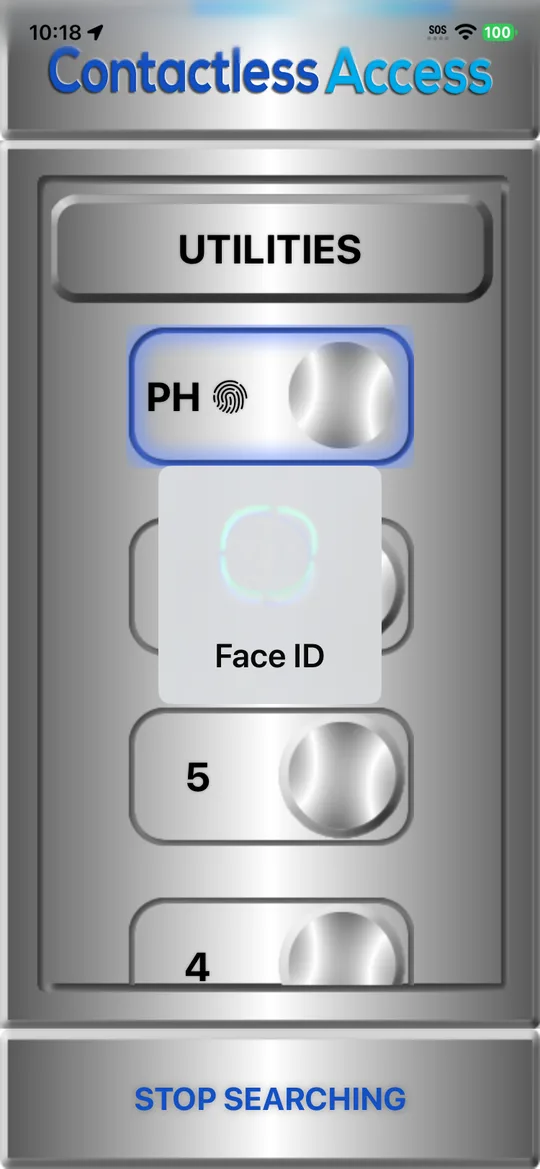
Where security chose High, the phone asks for a fingerprint or Face ID before the press.
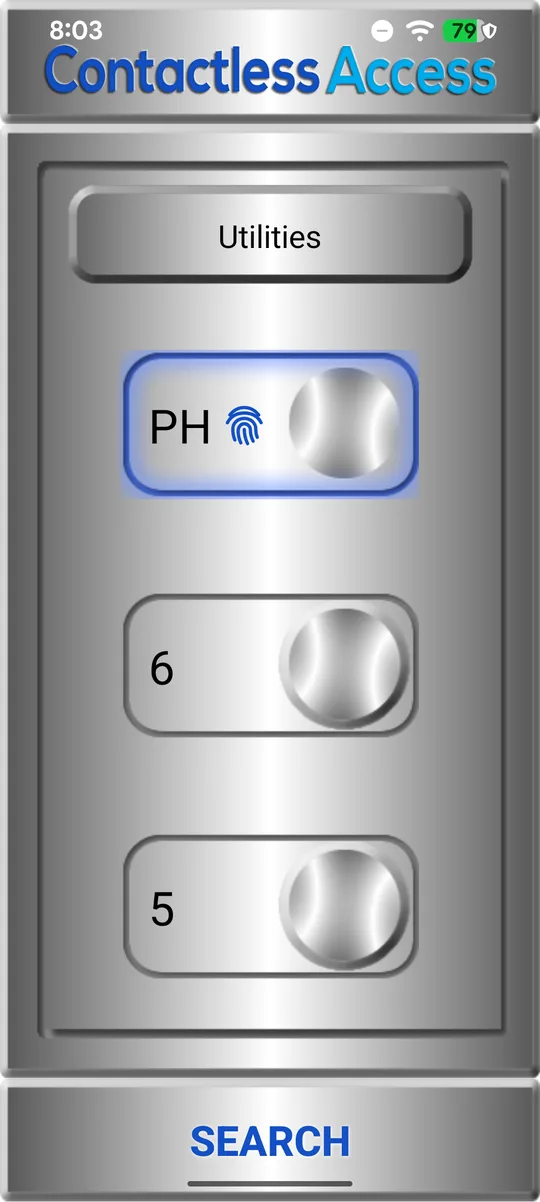
  • Android: PH, with a fingerprint mark, lit up after the fingerprint was accepted.

    Android

  • iPhone: Face ID checking before PH is pressed.

    iPhone

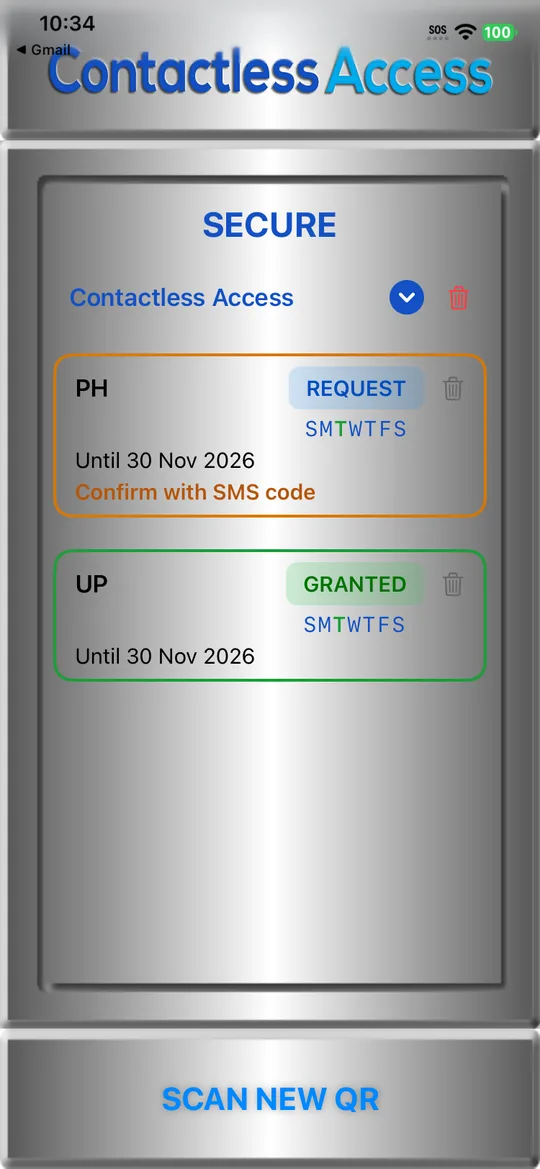
When an SMS code is needed, the card stays amber until the resident confirms with the code sent to their phone.
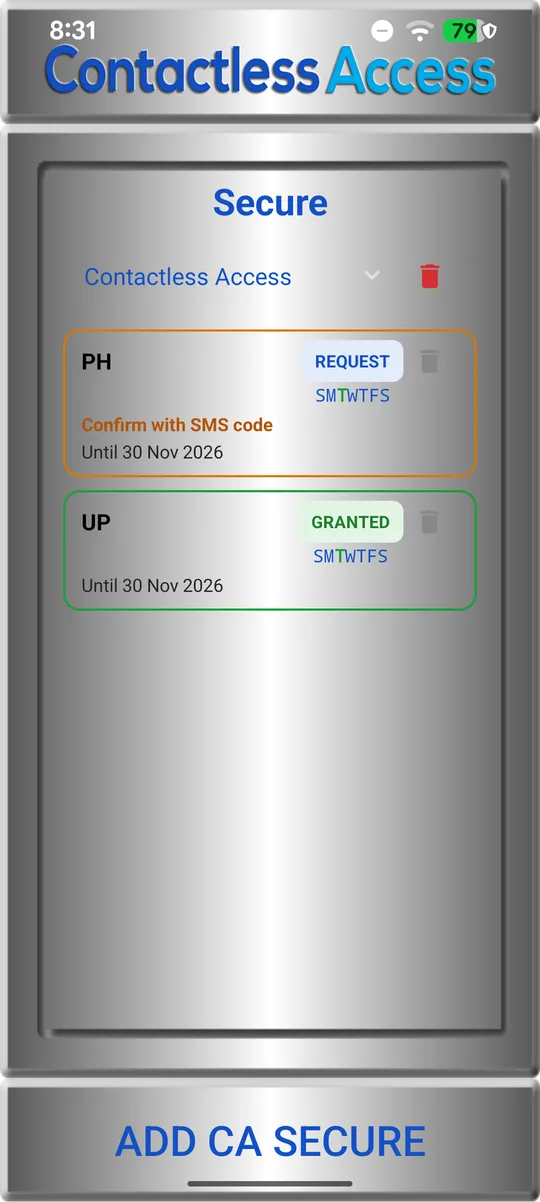
  • Android: the PH card in amber, marked REQUEST, Confirm with SMS code; UP is GRANTED.

    Android

  • iPhone: the PH card in amber, marked REQUEST, Confirm with SMS code; UP is GRANTED.

    iPhone

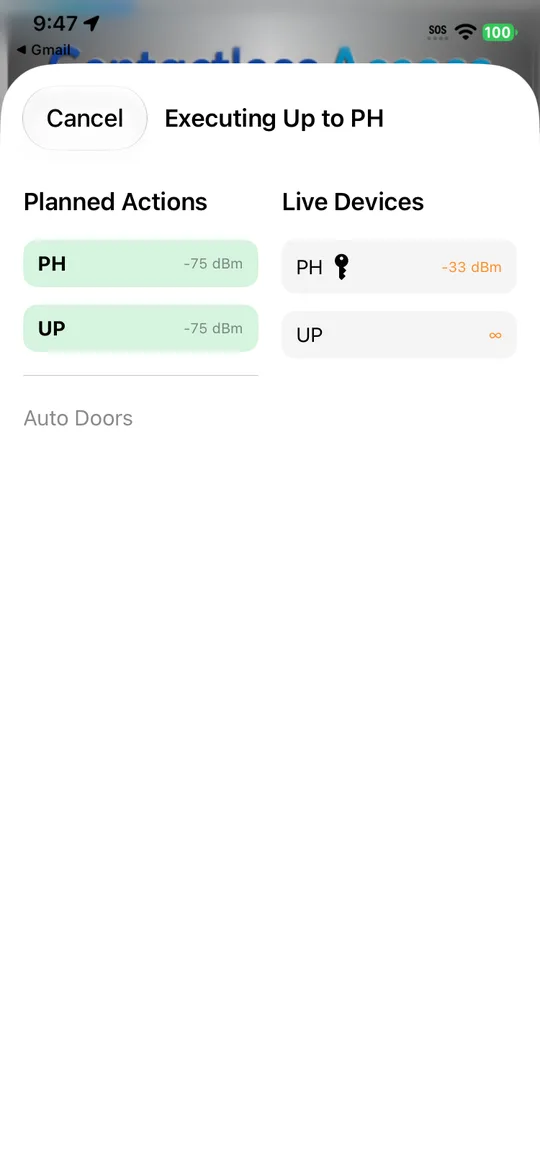
PATHs: one PATH can call the elevator up and press PH, using secure hall calls and floors along the way.
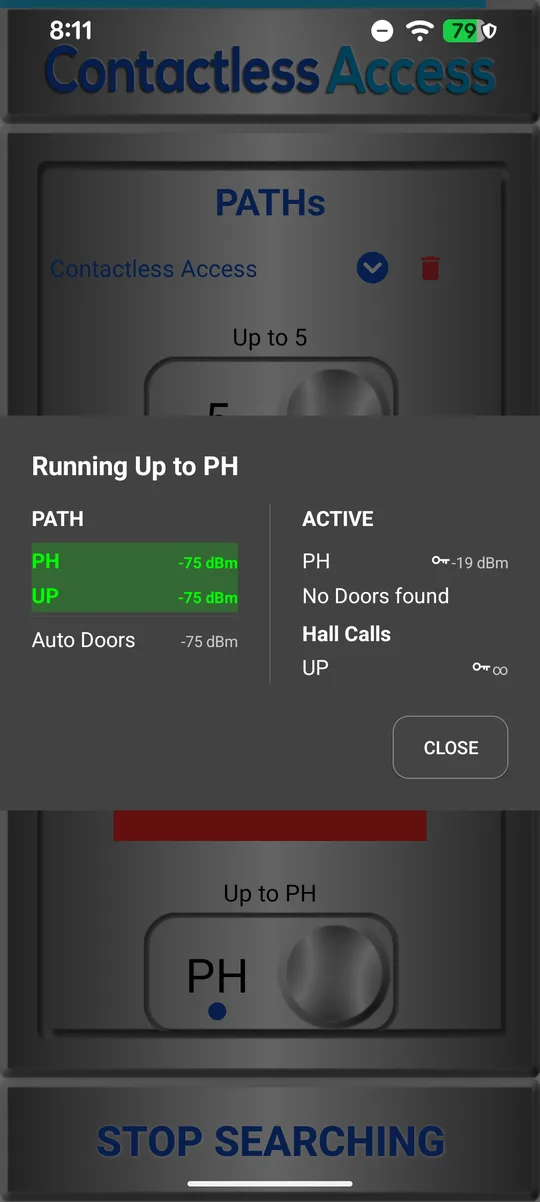
  • Android: the PATH Up to PH running, with PH and UP both done.

    Android

  • iPhone: Executing Up to PH, with PH and UP planned and PH found with its key.

    iPhone

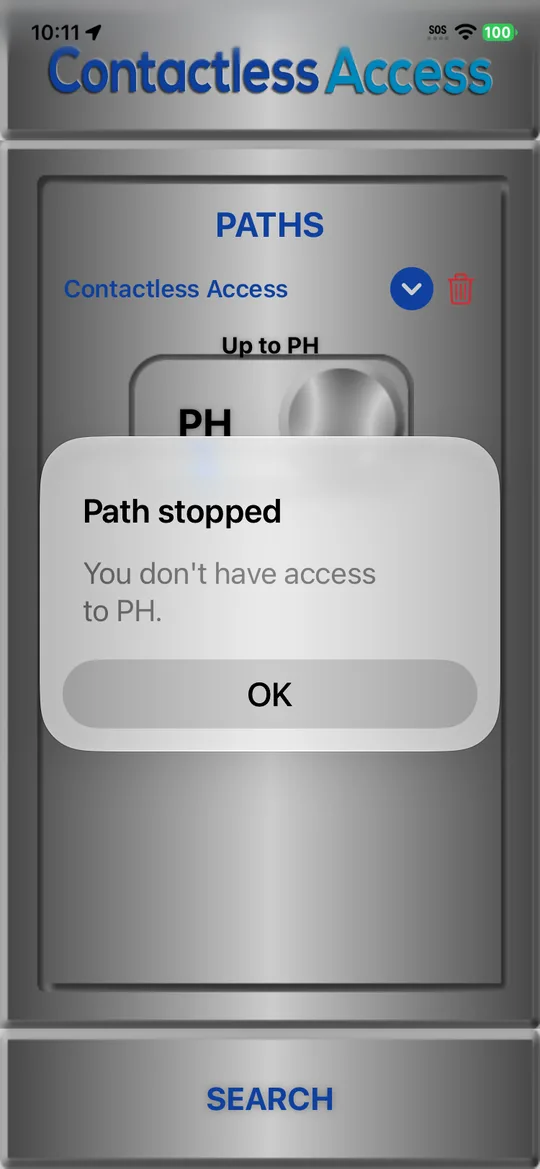
PATHs follow access too: the app won’t make a PATH to a floor the phone can’t use, and a PATH stops at a floor it no longer has access to.
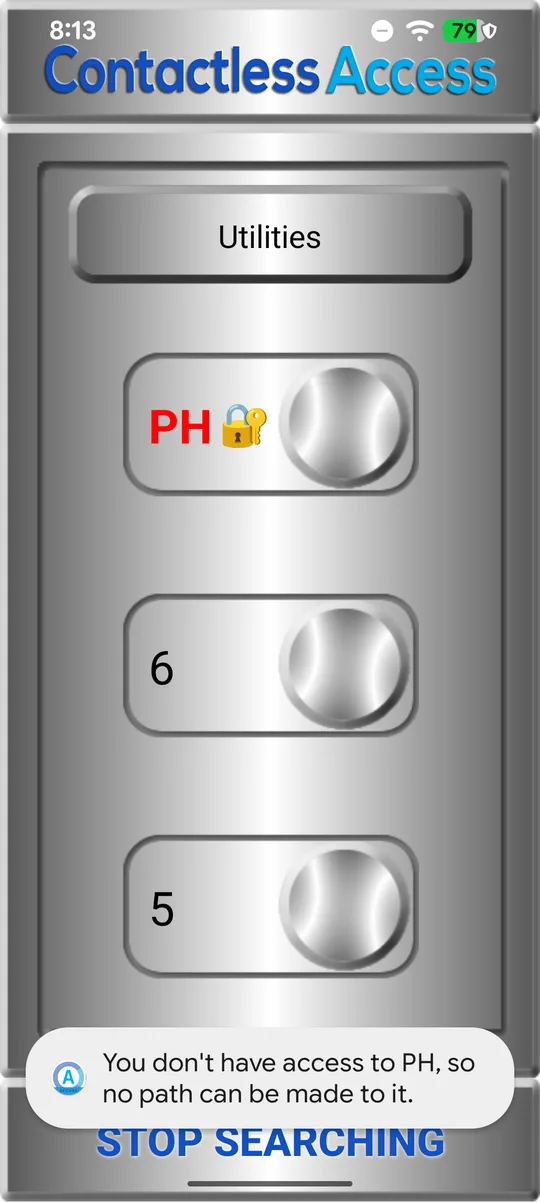
  • Android: You don’t have access to PH, so no path can be made to it.

    Android

  • iPhone: Path stopped. You don’t have access to PH.

    iPhone

When access changes

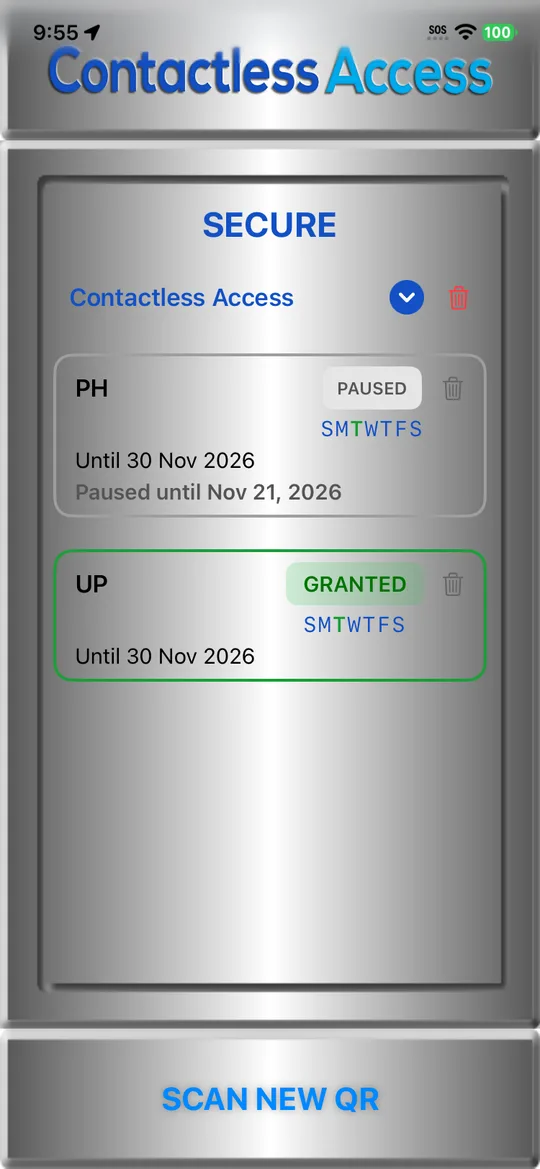
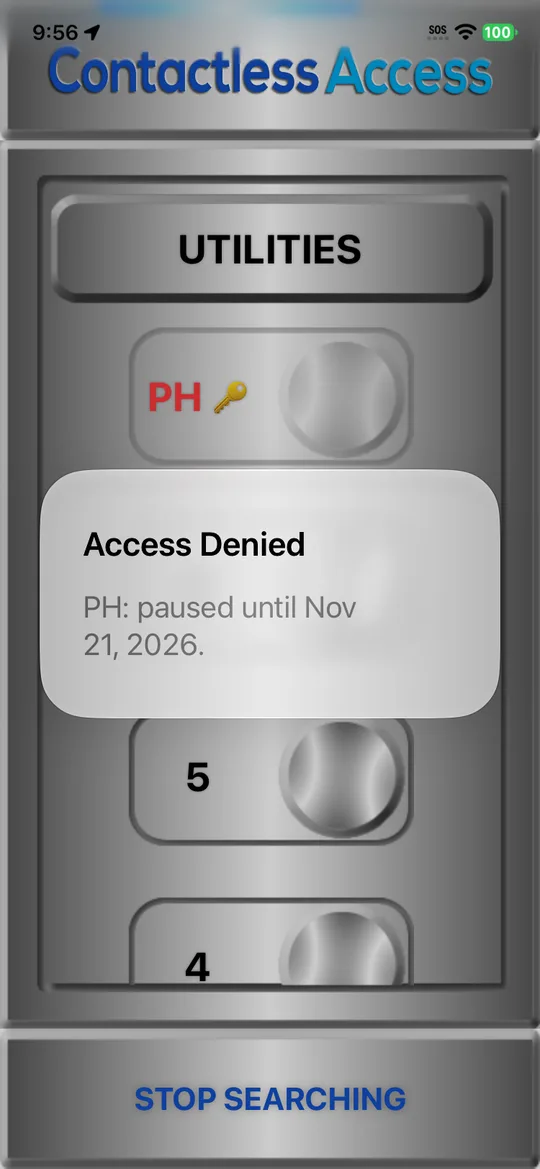
Paused: security can pause an access until a date. The card shows the date, and a tap on PH says it is paused.
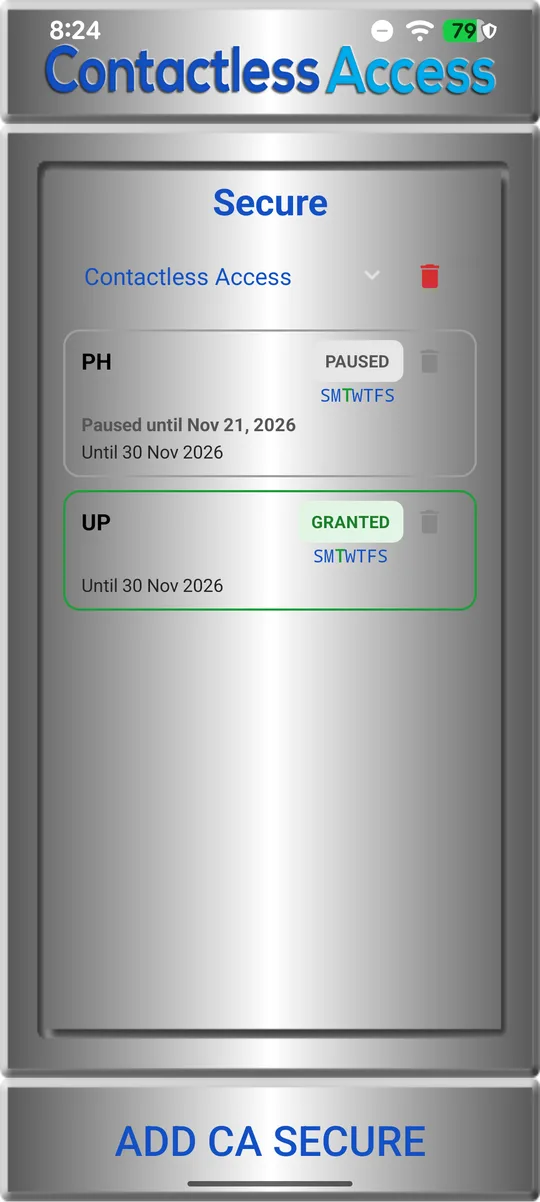
  • Android: the PH card marked PAUSED, paused until Nov 21, 2026; UP is still GRANTED.

    Android

  • iPhone: the PH card marked PAUSED, paused until Nov 21, 2026; UP is still GRANTED.

    iPhone

  • iPhone: a tap on PH shows Access Denied, PH: paused until Nov 21, 2026.

    iPhone

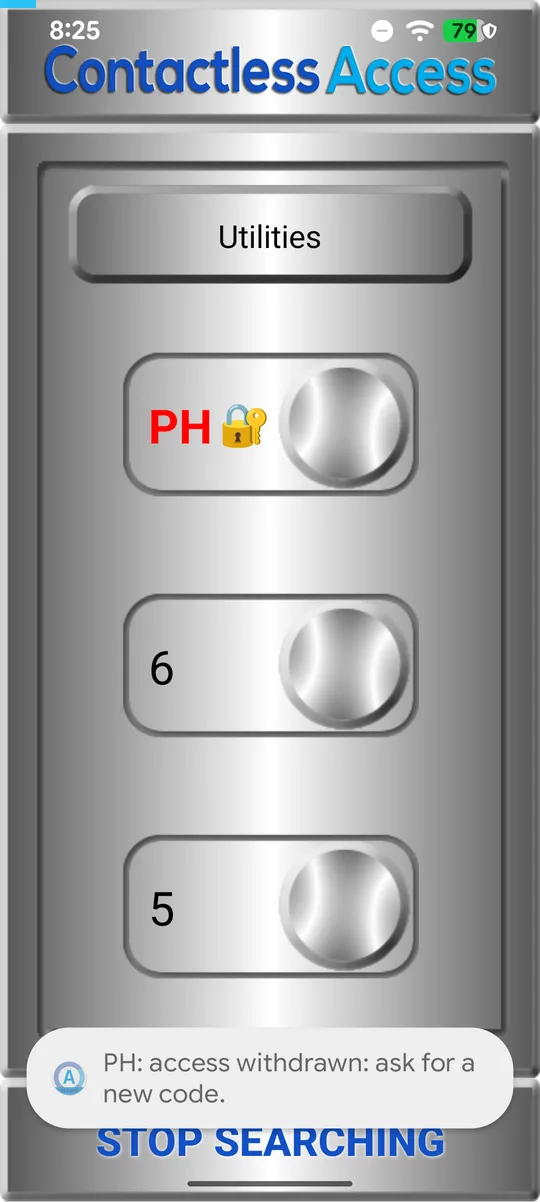
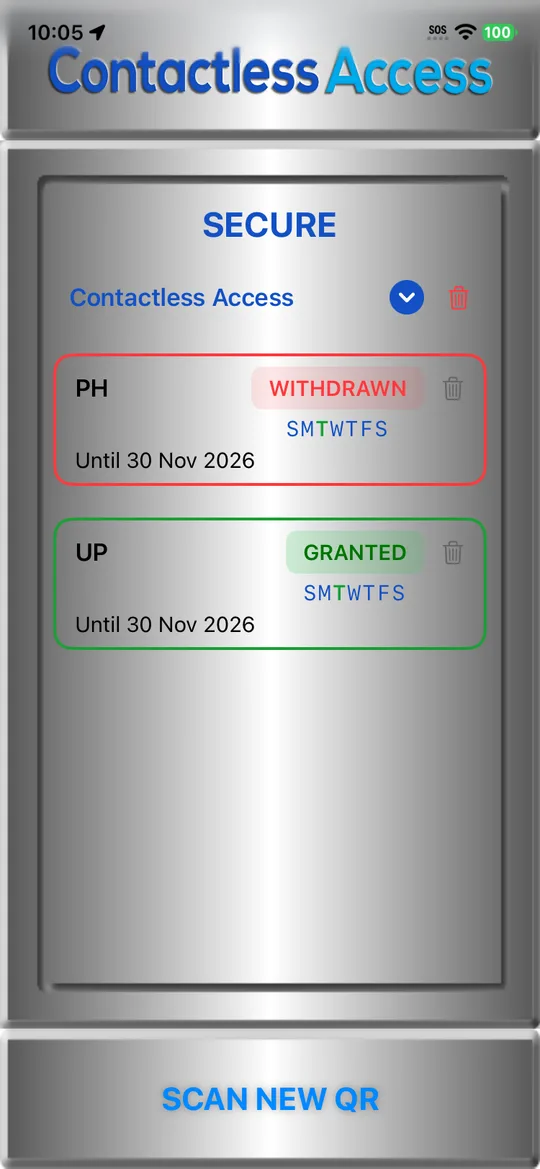
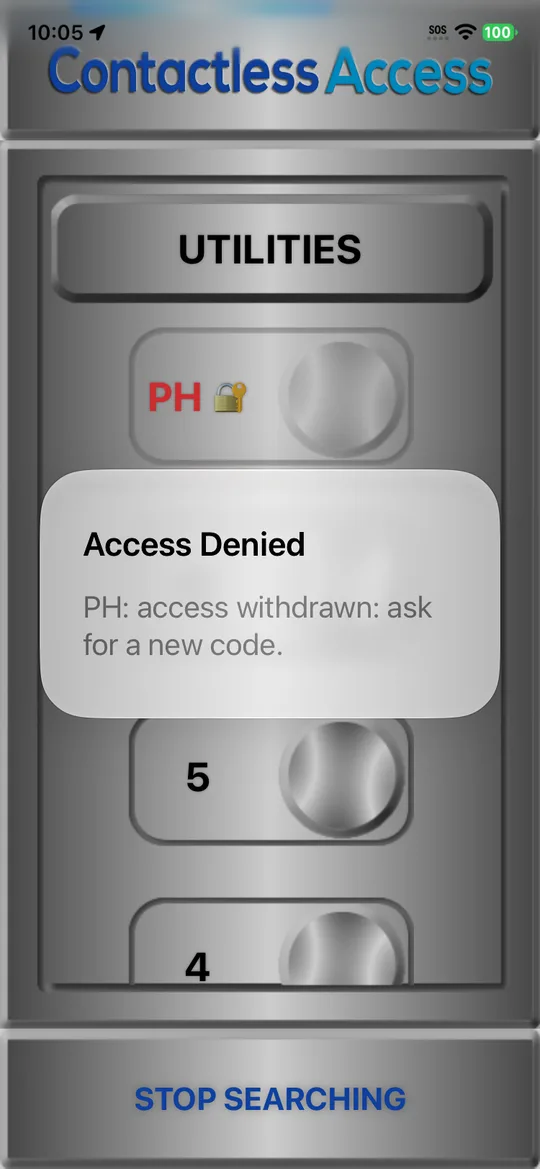
Withdrawn: the card says WITHDRAWN, PH shows 🔐 again, and a tap says to ask for a new code. A withdrawal reaches the phone the next time it is online.
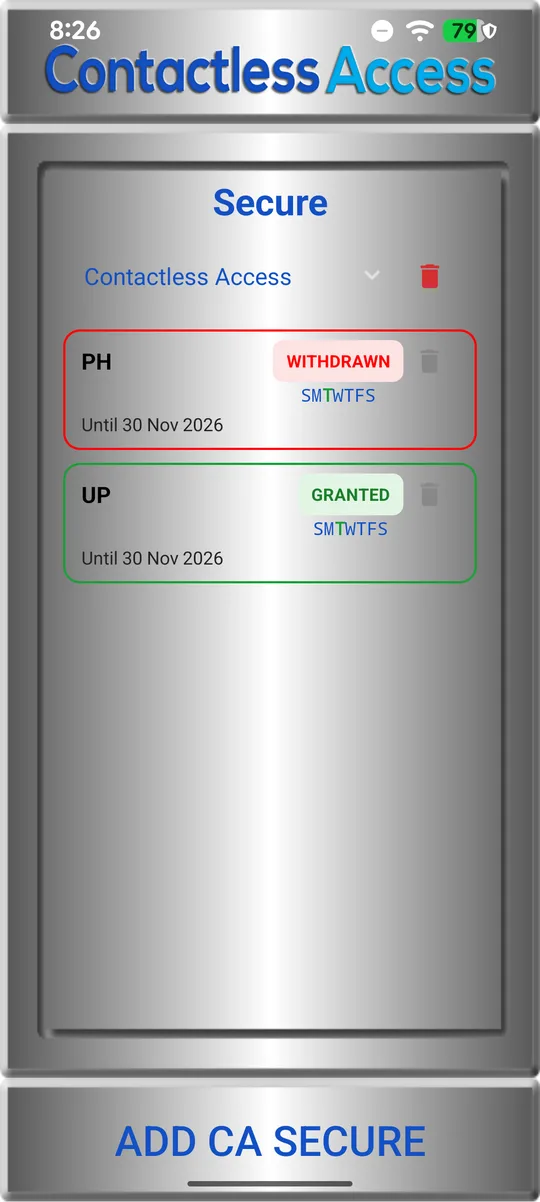
  • Android: the PH card in red, marked WITHDRAWN; UP is still GRANTED.

    Android

  • Android: PH with 🔐 again, and the message PH: access withdrawn: ask for a new code.

    Android

  • iPhone: the PH card in red, marked WITHDRAWN; UP is still GRANTED.

    iPhone

  • iPhone: a tap on PH shows Access Denied, PH: access withdrawn: ask for a new code.

    iPhone

What security sees

Every press is in Activity: who, which floor, when, and the result: opened, refused and why, or stopped on a PATH. You can download it as a spreadsheet (CSV).
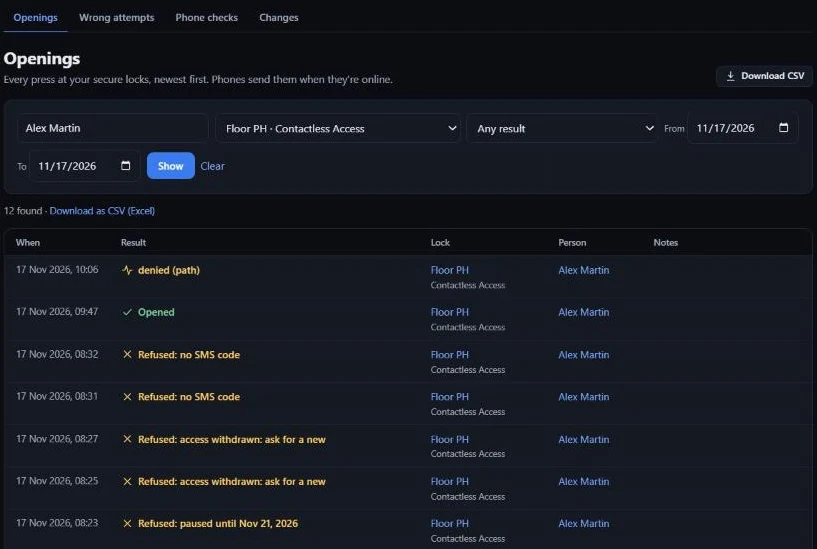
Activity in the security admin, filtered on Alex Martin and Floor PH: 12 presses today, including Opened, Refused: no SMS code, Refused: access withdrawn, Refused: paused until Nov 21, 2026, and denied (path), with a Download CSV button.
Activity for one person and one floor.

Screen readers

TalkBack and VoiceOver read a secure floor’s state aloud, for example “PH, locked”.
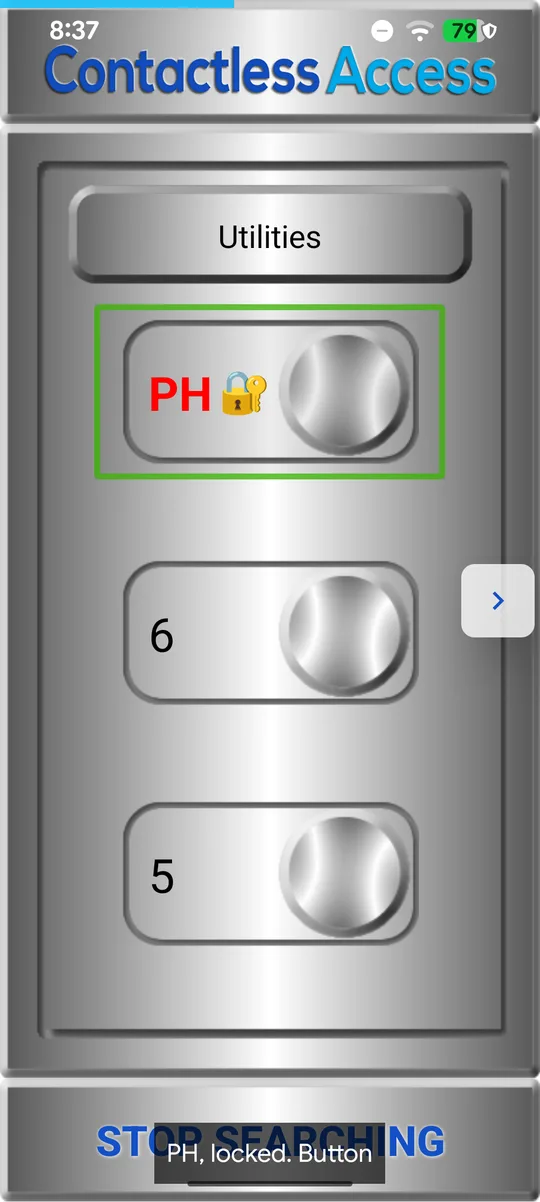
  • Android with TalkBack on: PH with 🔐 is selected and TalkBack reads PH, locked. Button.

    Android

  • iPhone with VoiceOver on: PH with 🔐 is selected and VoiceOver reads PH, locked, Button.

    iPhone

Talk to us about secure elevators

Tell us about the floors and hall calls you want to secure, and who needs access.

Send us a message

Secure elevators help